
How a small team can handle WhatsApp, Instagram and web chat
How a small team can cover WhatsApp, Instagram, Messenger and website chat without burning out: one inbox, one owner per chat and automation for repeat questions.
Product pages: Instagram chatbot, Shared inbox




Meet the support team at a growing online store: two people, four channels. WhatsApp pings on one phone. Instagram DMs land in the Meta Business Suite. Website chat lives in another tab. Messenger is "someone checks it sometimes". On a busy day, a customer asks the same question on Instagram and WhatsApp, both people answer, and they give slightly different replies.
More channels should mean more chances to help customers, not more tabs to babysit. The difference comes down to running them as one operation instead of four.
Why does one inbox matter so much?
Running each channel in its own app is the most common mistake. Conversations get missed, two people answer the same customer and nobody sees the full picture.
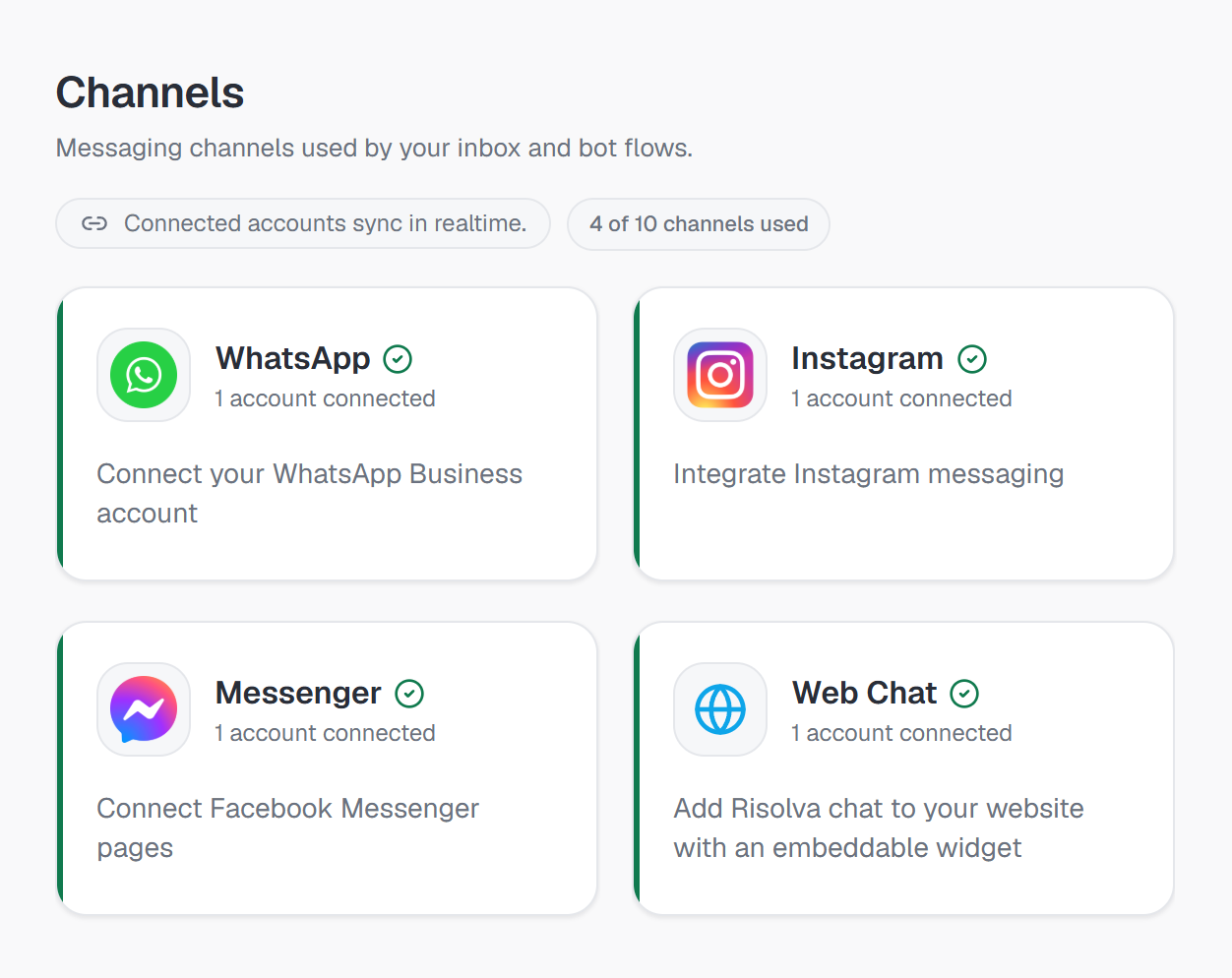
A shared inbox for WhatsApp, Instagram, Messenger and web chat fixes this. Every conversation, from every channel, lands in one list. Your team can filter by channel when it helps, but they work from one queue. Look for:
- Every channel in one place: WhatsApp, Instagram, Messenger and website chat
- A clear owner and status on every conversation, so nobody replies twice
- The customer's earlier conversations on screen when you reply
What do customers use each channel for?
Each channel has its own habits, and it helps to plan for them.
| Channel | What customers use it for | What to watch |
|---|---|---|
| Orders, bookings, delivery questions, anything personal | Reply within the 24-hour customer service window | |
| Product questions from posts and stories, quick pre-sale questions | Story replies arrive as DMs, but comments need someone watching the app | |
| Messenger | Similar to Instagram, often a slightly older audience | Facebook Page messages go unnoticed if nobody checks the Page |
| Website chat | Visitors who are already shopping or comparing | Fast answers here directly affect sales |
Risolva answers Instagram DMs and story replies but not comments, and covers messages sent to your Facebook Page in the same inbox.
How do you automate without losing consistency?
Small teams spend most of their time on a short list of questions: where is my order, what are your hours, do you ship to me, can I return this. They are the same on every channel, just phrased differently. That is exactly what an AI assistant is good at.
The key is one set of sources for every channel, so the answer to "do you ship to Canada?" is identical on WhatsApp, Instagram and AI chat on your website:
 fernwood.homeInstagram · example conversation
Keep it safe with three rules: answers only from your own material, the source shown where it helps, and clear handoff rules so complaints and sensitive topics reach a person right away.
What response time should you aim for on each channel?
You do not need to answer every message instantly, but you need to be predictable:
- With an AI assistant on routine questions, first replies can be near-instant on every channel
- For handoffs, "someone from our team will reply within the hour" beats silence
- Out of hours, say when a person will be back, and let the assistant cover what it can
Who owns each conversation?
The rule that matters most for a small team: every conversation has one owner at a time.
- The AI assistant owns it firstUntil it answers, or a rule hands it over.
- A person takes overOne click, and the assistant stays quiet from then on.
- Hand it back when doneThe assistant picks up routine follow-ups like delivery updates.
Which multichannel support numbers should a small team track?
You do not need a wall of dashboards. A handful of numbers, looked at weekly, is enough:
- Conversations by channel, to see where customers really are
- First response time by channel
- Share resolved by AI versus handed to the team
- Top topics, which show which sources to improve
Patterns jump out quickly, like a spike in delivery questions that points to a courier problem.
The bottom line
Supporting customers across channels with a small team is less about working harder and more about working from one place, with one source of truth and an assistant that takes the repetitive questions off everyone's plate. If you want to see how many hours that frees up, read how AI chatbots save your team time.
Frequently asked questions
What is a shared inbox for customer support?
A single place where messages from every channel (WhatsApp, Instagram, Messenger and website chat) arrive, so the whole team works from one queue with one view of each customer.
How can a small team support several messaging channels?
Put every channel in one inbox, let an AI assistant answer the repeat questions on all of them from the same sources, and give every conversation a single clear owner.
Which channel should we start with?
The one where most of your customers already are, often WhatsApp or Instagram. Get your sources and handoff rules right there, then add the next channel.
What is the difference between multichannel and omnichannel support?
Multichannel means you answer on several channels; omnichannel usually means those channels share one queue and one view of the customer. For a small team, the first step is getting every channel into one inbox with one owner per chat.